
News
EACE 27th Convention Closes as a Landmark Gathering for Africa's Infrastructure Future
November 9, 2026
ETHIOPIAN ASSOCIATION OF CIVIL ENGINEERS (EACE)
EACE 27th Convention Closes as a Landmark Gathering for Africa's Infrastructure Future
Addis Ababa, Ethiopia | International Infrastructure Conference 2026 | September 27–30, 2026 | Conference at Sheraton Addis, September 28–29
Building Africa 2050: Engineering Resilient, Sustainable, and Smart Infrastructure
The Ethiopian Association of Civil Engineers (EACE) has concluded its 27th Convention, the International Infrastructure Conference 2026, with delegates from more than ten countries, a high-level line-up of ministers, institutional leaders and industry executives, four partnership agreements signed, and an awards ceremony recognising those who made the convention possible.
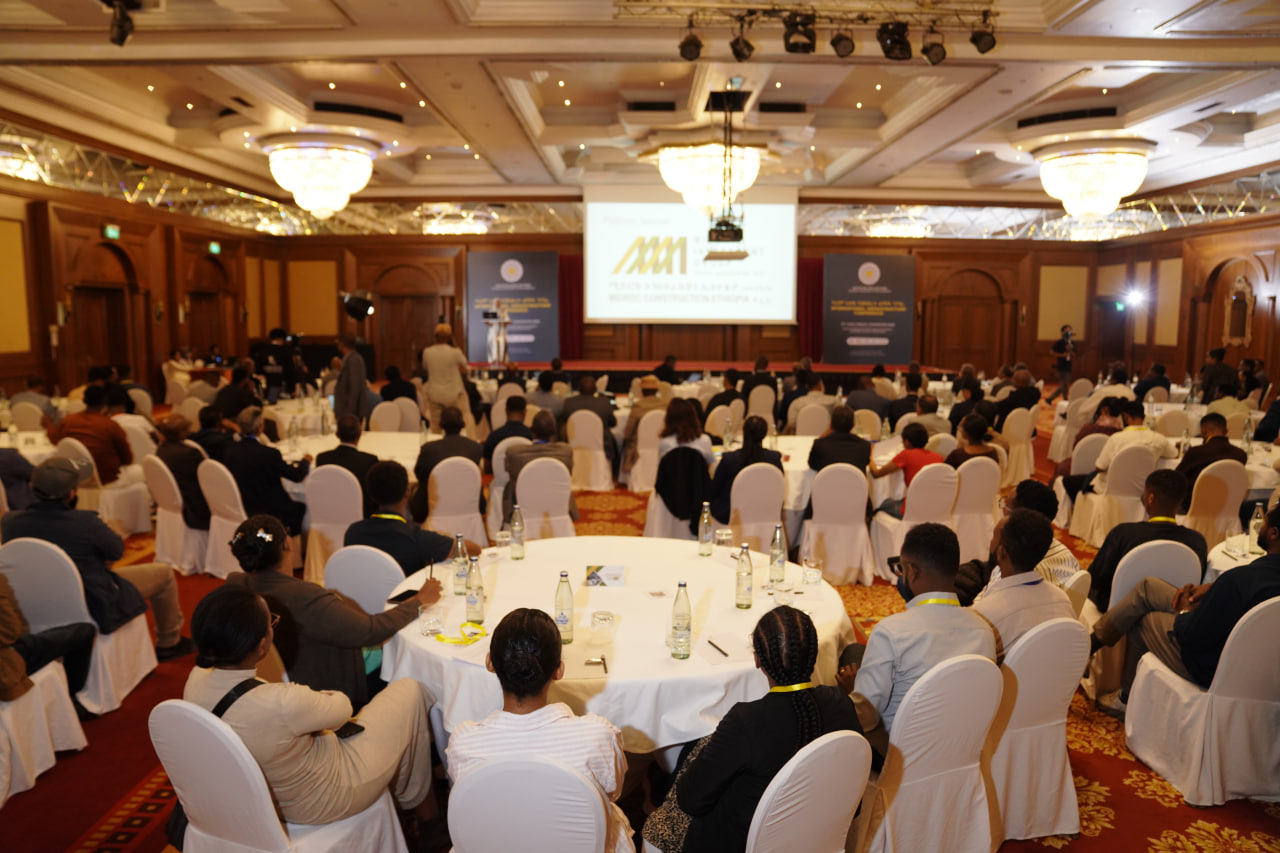
The four-day convention began with industry visits to the Adey Abeba Stadium and the Addis Ababa corridor development project, and closed with a visit to MIDROC Group's Mohammedia Village. In between, held under the theme "Building Africa 2050: Engineering Resilient, Sustainable, and Smart Infrastructure," the two-day conference at the Sheraton Addis brought engineers, policymakers, contractors, developers, academics and international partners into one room to work on one question: how Africa builds the infrastructure of the next 25 years, not just quickly, but well.
The Convention at a Glance
• 10+ countries represented, including Nigeria, Somalia, Italy, the Netherlands, Germany, Cyprus, Namibia, Tunisia, Ghana and the United Kingdom
• Six technical tracks covering the full infrastructure agenda
• Four partnership agreements signed on Day One
• A recognition and awards ceremony closing the programme
• Two industry visits, opening (September 27) and closing (September 30) the programme, so delegates saw Addis Ababa's infrastructure on the ground as well as on the agenda
A High-Level Opening
The conference opened to a full house, with guests of honour including Dr. Muaz Bedru, Deputy General Director of the Ethiopian Construction Authority, Ministry of Urban and Infrastructure Development; H.E. Engr. Hon. Abubakar Momoh, FNSE, Honourable Minister of Regional Development of the Federal Republic of Nigeria; Eng. Zahra Abdulhadi, Deputy CEO of MIDROC Investment Group; and Mr. George Asamani, Managing Director of the Project Management Institute's (PMI) Sub-Saharan Africa region.
In his opening keynote, EACE President Eng. Amanuel M. Hailemariam argued that physical development cannot be separated from social responsibility.
"Whatever we do, we should include the word sustainability," he told delegates, calling for a model that brings young engineers and SMEs, already driving several of the continent's corridor projects, directly into regional infrastructure delivery.
Dr. Eng. Mesele Haile, Managing Director of MH Engineering, followed with a keynote on the seismic effect on major infrastructure, setting the tone for a first day that moved through earthquake resilience, building and housing policy, and transport infrastructure.
Six Tracks, One Agenda
The technical programme addressed the infrastructure agenda end to end:
1. Earthquake and seismic resilience of infrastructure, from design codes to major projects
2. Transport infrastructure, with dedicated sessions on rail, roads and bridges from the Ethiopian Railways Corporation, the Ethiopian Roads Authority and Helvetas Ethiopia
3. Water and energy infrastructure, opened by the Ministry of Water and Energy and a keynote from Eng. Gedion Asfaw, Chair of the Ethiopian National Committee on Dam Safety, followed by sessions on Ethiopia's water resource paradox, urban water security, the circular water economy, irrigation and risk-informed design codes
4. Building, housing and construction industry policy
5. Digital infrastructure and smart cities
6. Infrastructure project delivery excellence, the closing technical centrepiece, with a session on mega-project planning, financing, design and implementation by PMI Sub-Saharan Africa's George Asamani, followed by a panel with the World Bank, FIDIC Africa and the Ethiopian Roads Authority
Ethiopia's construction sector is projected to grow 7.7% annually through 2029, but scale is no longer the binding constraint. As Dr. Esayas Gebreyohaness, Associate Professor of Civil and Environmental Engineering at Addis Ababa University, told delegates:
"Massive infrastructure development has changed the economic and physical landscape of the country. Although constructing more is important, the key challenge now is constructing better, faster, safer, and in a more resilient manner."
Presenting alongside the national mass housing initiative, he pointed to a forthcoming set of 48 revised engineering codes that bring modern global standards together with local adaptation and materials.
Day Two also featured an address from the International Federation of Municipal Engineering (IFME) and a session from the Ethiopian Disaster Risk Management Commission.
Four Partnerships Signed
Day One's programme included the signing of four partnership agreements, extending EACE's reach well beyond Ethiopia's borders:
• The Engineering Professional Association of Namibia, represented by its President, Eng. Sophia Belete Tekie
• The Somali Engineers Association (SEA), represented by its Chairman, Eng. Ibrahim Abdi Heyle
• The World Council of Civil Engineers (WCCE), represented by its Continental Representative for Africa, Engr. Dr. Aishatu Aliyu Umar
• MIDROC Investment Group and the Project Management Institute (PMI), joining one of Ethiopia's largest investment groups with the global project management community
Together, the agreements open the way to joint training, knowledge exchange, cross-border professional mobility and shared work on standards and research.
The MIDROC–PMI agreement carries particular weight for the private sector. Eng. Zahra Abdulhadi, Deputy CEO of MIDROC Investment Group, was among the convention's guests of honour, and MIDROC's partnership with PMI reflects what the convention set out to show: that Ethiopia's leading companies, its engineering community and global professional bodies can build capability together, and that the quality of delivery depends on all three.
Networking and Opportunities
Beyond the plenary halls, the convention did what conventions are for. Contractors, developers, consultants, regulators, academics and financiers met international delegates and each other, and the conversations continued over a cultural dinner for international delegates on Day One. For visiting delegations, the convention was an introduction to Ethiopia's construction sector and its engineering community; for Ethiopian firms and professionals, it opened doors to regional and international partners, collaborators and markets.
Recognition and Awards
The convention closed with EACE's Recognition and Awards ceremony, honouring the institutions, partners and individuals who contributed to the convention and to the engineering profession, before the Final Awards and Closing Ceremony brought the programme to an end.
Industry Visits: Seeing the Infrastructure on the Ground
The convention was framed by two industry visits, so that the technical discussion in the Sheraton ballroom was matched by what delegates saw on site.
Opening visit (September 27). The programme began with visits to the Adey Abeba Stadium and the Addis Ababa corridor development project, two of the capital's most visible recent infrastructure works, giving international delegates and members a first-hand view of the city's transformation before the conference opened.
Closing visit (September 30). On the fourth day, delegates and guests of honour visited Mohammedia Village, developed by MIDROC Group and hosted by Huda Real Estate. Described as a city within a city at the heart of Addis Ababa, the development offered a close look at integrated, large-scale urban construction and private-sector delivery, and brought the convention to a close where the conversation on resilient, sustainable and smart infrastructure meets the ground.
Looking Ahead
As the African Development Bank's estimated $68–108 billion annual infrastructure financing gap made clear throughout the conference, the work does not end when the ballroom empties. The 27th Convention leaves behind new institutional partnerships, a forthcoming set of revised engineering codes, and a continent-wide professional network convened around one shared deadline: 2050.
EACE thanks every guest of honour, speaker, partner, sponsor, delegate, volunteer and member of the organising committee who made the convention a success, and looks forward to building on it together.
Ethiopian Association of Civil Engineers (EACE) | eacecivil.org | info@eacecivil.org